
Start here
The Difference in One Minute
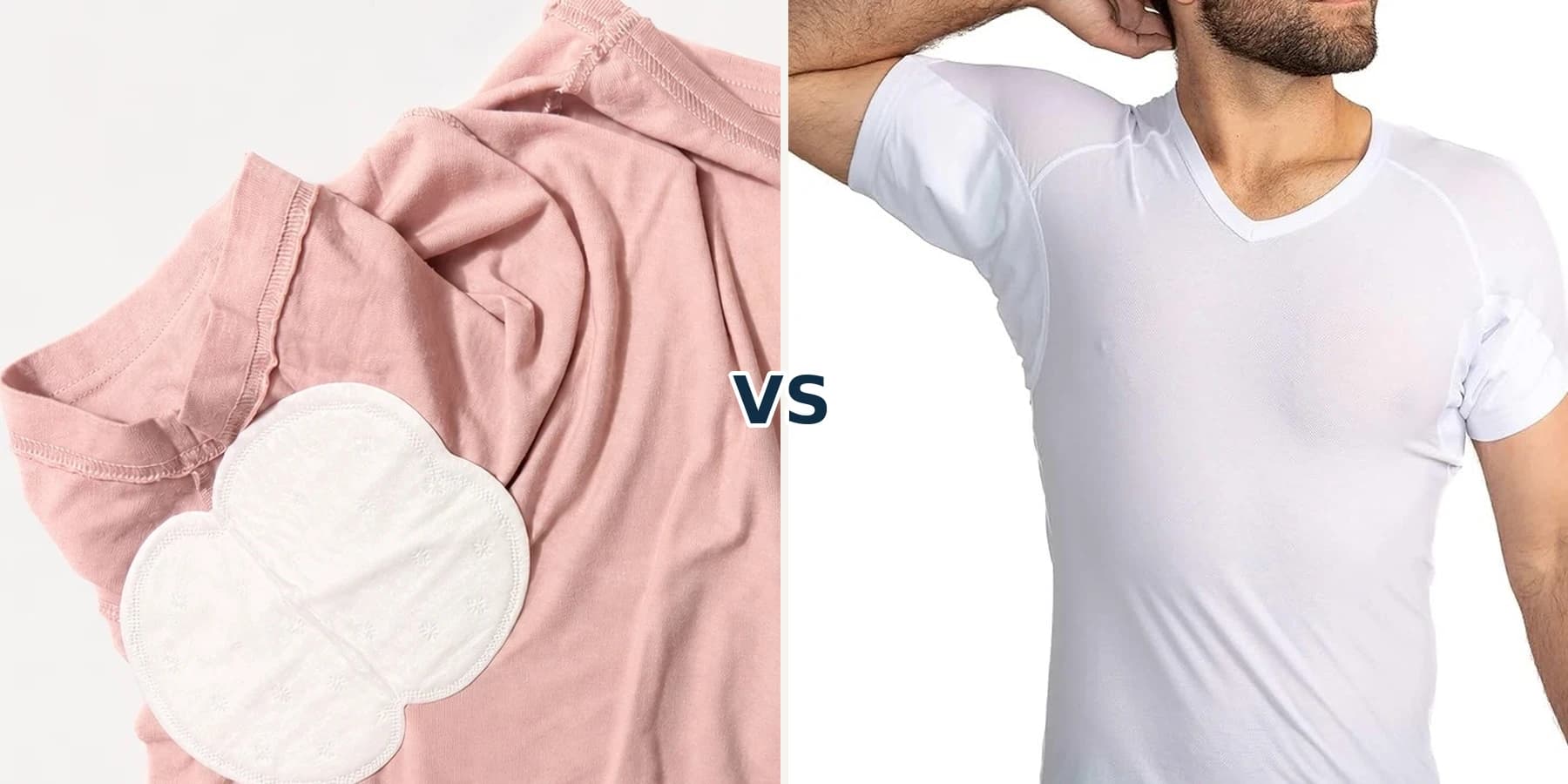
A clothing-adhesive pad is a removable absorbent insert placed inside the garment underarm. SWEARX uses this format and attaches to clothing only, not to skin. A sweat-proof undershirt is a reusable base garment with protective material integrated into its underarm area. It sits between the body and the outer shirt as a complete clothing layer.
Both formats are designed around clothing protection rather than reducing perspiration. They may help keep some moisture from reaching an outer garment and help reduce visible clothing marks, but suitability depends on garment, fit, fabric, activity, placement, product construction, and timing. For a broader explanation of pad formats and garment compatibility, visit the complete Sweat Pad Guide.
Decision matrix
Side-by-Side Comparison
Compare the routine around each format, not only the absorbent area. The practical differences include how protection is positioned, what can show through an outfit, what happens away from home, and what needs to be replaced or washed afterward.
Swipe horizontally to compare
Two systems
How Each Option Protects Clothing
Clothing-adhesive pad
Absorbent material placed in the garment
The pad is aligned with the garment underarm, pressed onto clean and completely dry fabric, and smoothed flat. It helps absorb moisture reaching that covered area. It must be checked and replaced when saturated, loose, folded, shifted, or uncomfortable.
Protective undershirt
Protection integrated into a base layer
The underarm panel is part of the undershirt, so its position follows the fit of that garment. Materials and construction differ by product. After wear, the full shirt needs care according to its label before it returns to the rotation.
This comparison concerns observable format and routine. SWEARX has not tested competitor undershirts, so the article does not rank brands or repeat seller claims about protection, temperature, durability, odor, or wear time.
For a closer look at the clothing-pad side of this comparison, see how to evaluate whether an underarm sweat pad is working.
Garment fit
Coverage and Placement
Pads let you position absorbent coverage inside a specific garment, but the usable area can be interrupted by seams, lining, stretch, texture, or a narrow arm opening. Correct placement usually means centering coverage where moisture reaches the garment while keeping the pad flat. Detailed preparation, seam alignment, movement checks, replacement, and removal are covered in the guide to using underarm sweat pads inside clothing.
An undershirt removes the separate adhesive-placement step, but integrated coverage is only useful when the shirt fits so its protective underarm area sits in the intended position. Loose, tight, short-sleeved, or differently cut base garments can align differently beneath the same outer shirt. Test both sides while reaching, sitting, and lifting the arms.
Complete outfit check
Visibility Under Dress Shirts and Fitted Clothing
Thin, light-colored, fitted, or structured clothing can reveal details from either system. With pads, look for an outline, lifted edge, fold, or change in how the outer fabric hangs. With an undershirt, check its neckline, sleeves, seams, color, and the thickness of the integrated panel. A jacket may conceal some areas while making the outfit warmer or changing movement.
Put on the complete outfit and inspect front, side, and arms-up views in ordinary light. Move as you expect to move during the day. The shirt-specific guide to preventing sweat stains on shirts explains fabric, fit, seam, and pre-wear checks in more detail.
Wear experience
Comfort, Heat, and the Extra Layer
A clothing pad avoids covering the full torso, which may appeal in warm weather or under a layered formal outfit. It still adds material at the underarm, and poor placement, folding, saturation, or an unsuitable garment can feel distracting. Adhesive performance and comfort can change as fabric moves or moisture increases.
A sweat-proof undershirt adds a complete layer. Its warmth, softness, fit, and breathability vary by material, construction, weather, outer clothing, and the wearer. An integrated panel avoids a loose insert, yet panel thickness or shirt fit may still affect comfort. Neither format should be judged without wearing it under the intended outfit at home.
Routine comparison
Laundry, Replacement, and Daily Setup
Before wear
A pad needs a compatible garment, clean and dry fabric, accurate placement, firm smoothing, and an outfit check. An undershirt needs the correct clean size and cut, plus a check that its neckline, sleeves, and panels sit well.
During wear
A pad may need checking or replacement when its condition changes. An undershirt stays as one garment, although comfort, fit, and moisture should still be monitored.
After wear
A used pad is slowly removed from the garment and discarded. A protective undershirt enters the laundry and drying cycle specified by its manufacturer.
Away from home
Pads require fresh spares and private replacement access. Undershirts require enough clean garments for the trip or reliable washing and drying access.
Cost also follows the routine. Pads are recurring single-use purchases; undershirts involve a higher garment purchase and washing, drying, storage, and enough shirts for the rotation. Prices and useful life vary, so a single cost calculation would be misleading.
Use cases
Which Is Better by Situation?
Dress shirts and office wear
- Pads may fit when
- Pads may suit one shirt without a full base layer. Test the seam, movement, and outline under the buttoned shirt.
- An undershirt may fit when
- An undershirt may suit a regular office routine when its neckline, sleeves, and fit stay discreet.
Uniforms and long shifts
- Pads may fit when
- Pads may work when the uniform has smooth underarm fabric and there is private replacement access.
- An undershirt may fit when
- An integrated shirt may simplify a repeat routine if the layer is comfortable and clean shirts are available.
Travel
- Pads may fit when
- Wrapped spares take little space, although changing requires a suitable stop and compatible clothing.
- An undershirt may fit when
- An undershirt avoids pad application but may require extra garments or a washing and drying plan.
Weddings and formal events
- Pads may fit when
- Pads may suit one tested outfit without a full layer. Pack spares when a change is realistic.
- An undershirt may fit when
- An undershirt may suit formal clothing when its collar, sleeves, color, and panel remain discreet.
Hot weather
- Pads may fit when
- Pads avoid a complete base layer but need checks because heat and activity can change their condition.
- An undershirt may fit when
- An undershirt adds torso fabric; comfort depends on material, fit, weather, activity, and preference.
Occasional use
- Pads may fit when
- A removable pad may suit a presentation, dinner, or individual garment after an at-home test.
- An undershirt may fit when
- A reusable shirt can work occasionally, but its fit, storage, and care may exceed the situation's needs.
Regular reusable routine
- Pads may fit when
- Regular pad use involves application, condition checks, removal, disposal, and replacement supply.
- An undershirt may fit when
- Protective undershirts may suit repeated use when laundering, drying, packing, and layering fit the routine.
Removable option
When Underarm Sweat Pads Make More Sense
Clothing-adhesive pads may be the more practical format when protection is needed for one compatible outfit, packing space is limited, or the wearer wants to avoid a full extra layer. They can also suit occasional presentations, travel days, or events when there is a realistic opportunity to check the pad and carry a replacement.
The tradeoffs are application time, garment dependence, possible outline or edge visibility, and the need to replace and discard a pad when its condition changes. Rough, delicate, stretched, treated, highly textured, heavily seamed, or narrow underarm areas may not provide predictable hold. Review the current SWEARX product details for the approved clothing-only product format before purchase.
Reusable option
When a Sweat-Proof Undershirt Makes More Sense
A protective undershirt may be more practical for someone who prefers integrated underarm coverage and is comfortable with a repeatable base-layer routine. It can remove the separate pad placement step and may pair well with a consistent group of dress shirts or uniforms after fit and visibility testing.
Its disadvantages include the extra clothing layer, dependence on size and cut, possible neckline or sleeve visibility, laundering and drying, packing volume, and the need for enough clean garments in rotation. Product constructions differ, and this article does not infer that one brand's claim applies to other undershirts.
Limits
When Neither Option Is Ideal
A pad may be unsuitable when there is too little garment fabric for flat clothing-only placement, it repeatedly shifts or saturates before a practical change, or its outline and comfort do not work with the outfit. An undershirt may be unsuitable when the added layer, fit, neckline, sleeves, care, or packing needs conflict with the clothing and conditions.
Neither format protects areas beyond its coverage or removes existing discoloration. If moisture is higher or less predictable, the specialist guide to selecting pads for higher-moisture situations explains saturation, replacement planning, outfit testing, and suitability limits. People seeking help with sweating itself should consult a qualified healthcare professional rather than treating clothing protection as medical care.
Choose by routine
Final Decision Guide
Choose clothing-adhesive pads when removable, outfit-specific coverage and minimal packing or layering are more important than a reusable routine. Choose a protective undershirt when integrated coverage and reuse are more important than the added layer, laundry, and fit constraints.
Before relying on either option, test the exact outfit, normal movement, visibility, comfort, and the practical plan for replacement or laundry. The right answer can change from one garment, climate, activity, or trip to another.
Buyer questions
Frequently asked questions
For the pad-specific fabric, fit, outline, and movement check, read the garment visibility guide.