
Four different signs
What Can Actually Be Visible?
Visibility is not one single effect. A pad outline is the overall footprint showing through the outer fabric. A raised or lifting edge creates a more defined line. Fabric distortion may appear as pulling, bunching, or an uneven surface. With short sleeves or limited underarm coverage, part of the insert can also appear near the sleeve opening when the arm is raised.
A visible sweat mark is different from a visible pad. A moisture mark changes the color or appearance of the garment, while pad visibility comes from the insert, its edges, or a change in the fabric surface. A pad may help absorb moisture within its covered area and still be too noticeable for a particular outfit.
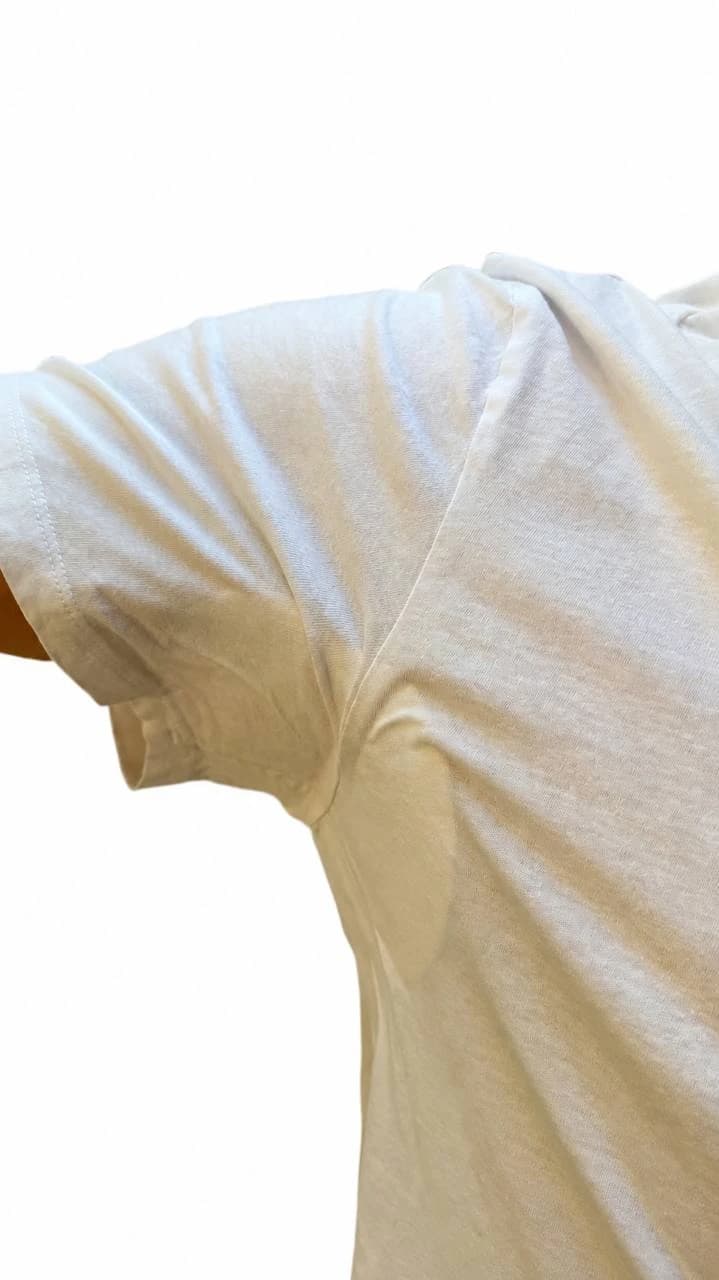
The thin white T-shirt makes the surface change easy to inspect, but the photograph does not establish a rule for every white shirt. Opacity, stretch, fit, lighting, seam position, and the way the fabric moves all contribute. The relevant question is whether the insert remains acceptably discreet in the exact garment you intend to wear.
SWEARX attaches inside clothing only, never directly to skin. It is a clothing-protection option rather than a way to stop perspiration. For the broader performance question, see what underarm sweat pads can and can’t do.
Photographed garment examples
Real Shirt Test: How the Pad Looks Under Three Different Shirts
These are practical garment examples, not controlled laboratory tests. They show how the visible result can change with fabric, pattern, structure, fit, and tension. Color or pattern alone does not determine whether a pad will show.
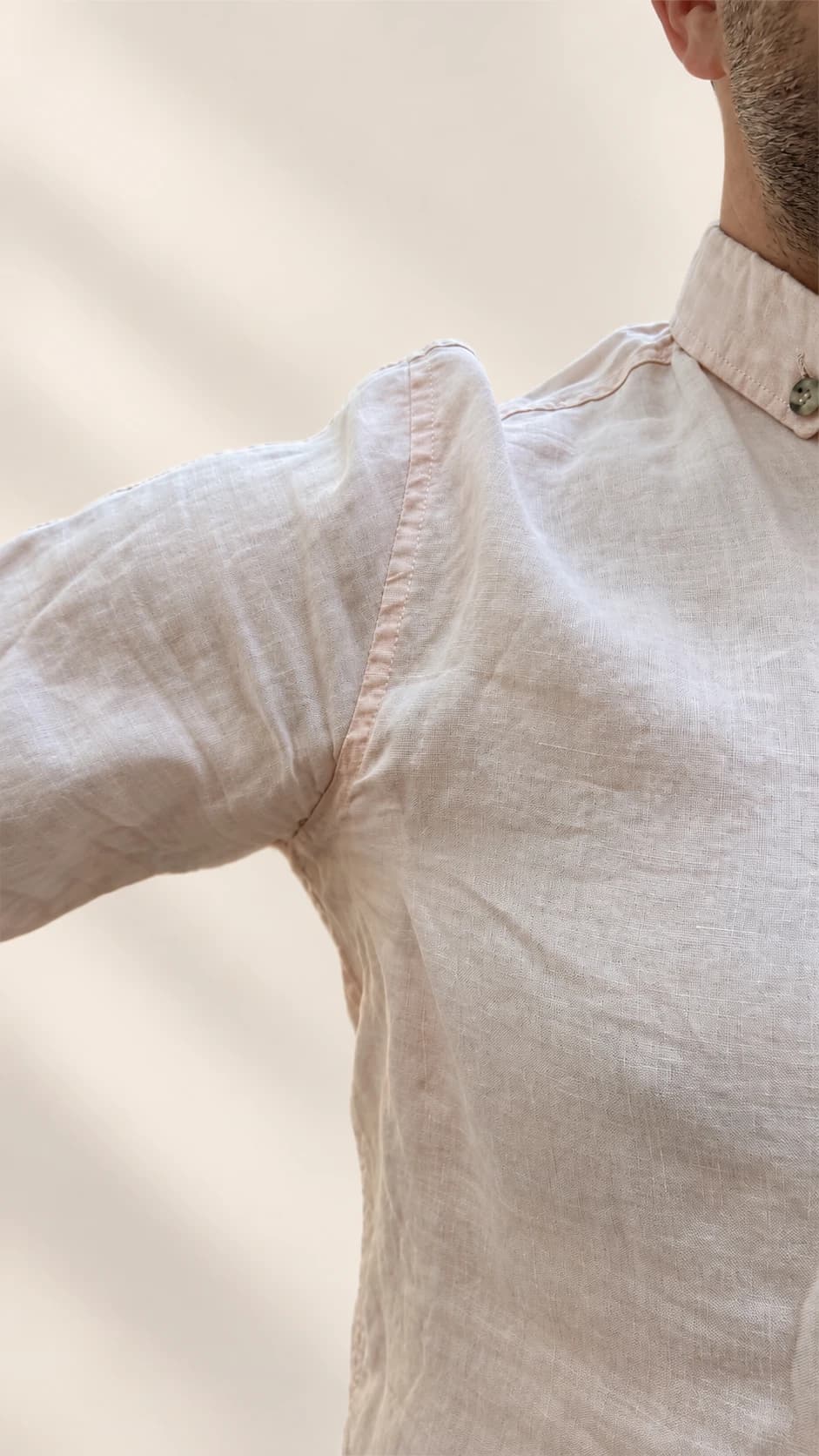
Light pink shirt
The lighter, relatively fine fabric makes surface changes and the pad footprint easier to inspect. The result also depends on fit, underarm tension, lighting, and placement.
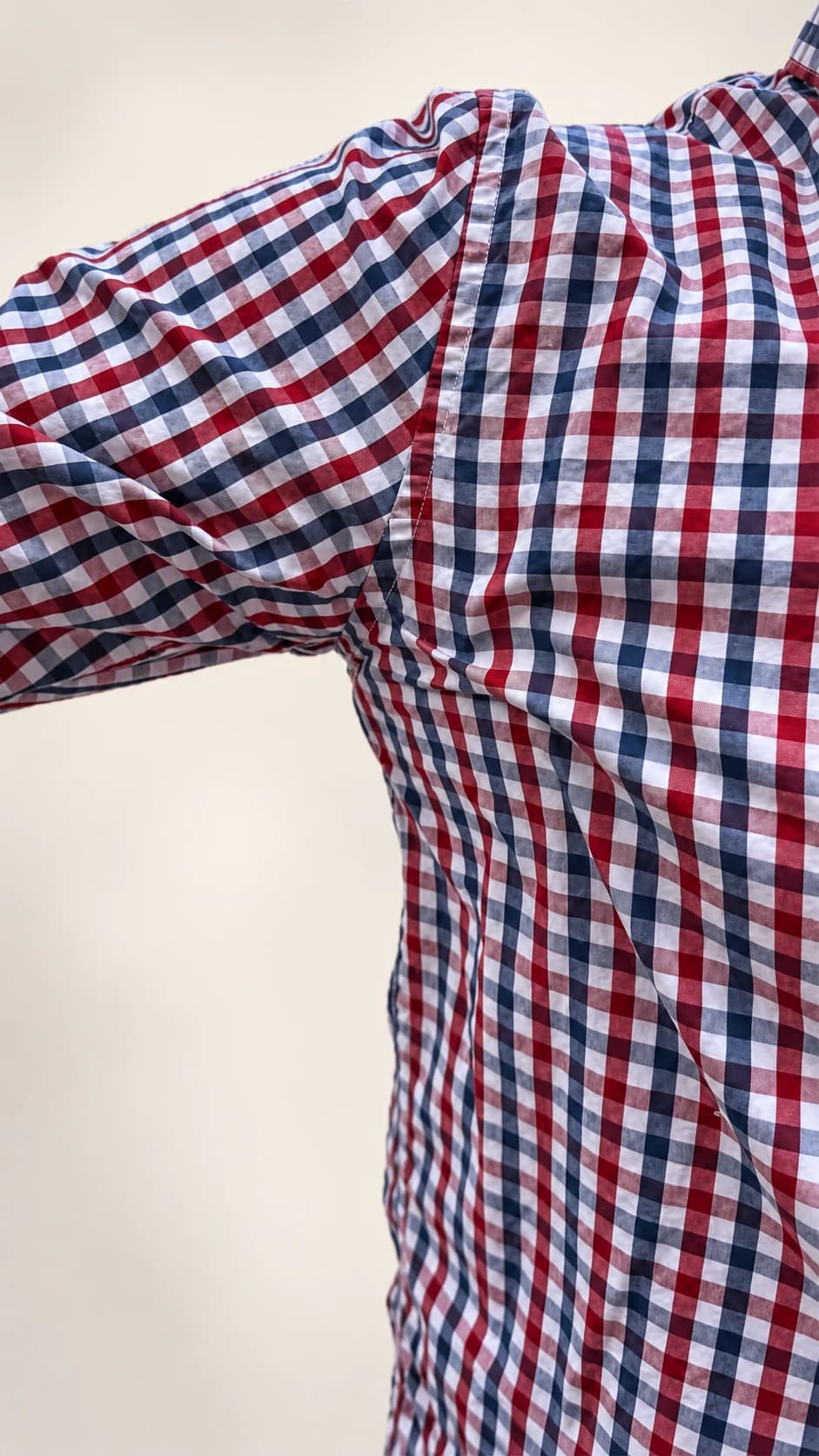
Red gingham shirt
The repeating check pattern visually breaks up some surface changes in this photograph. Patterned fabric does not guarantee that a pad will remain concealed.
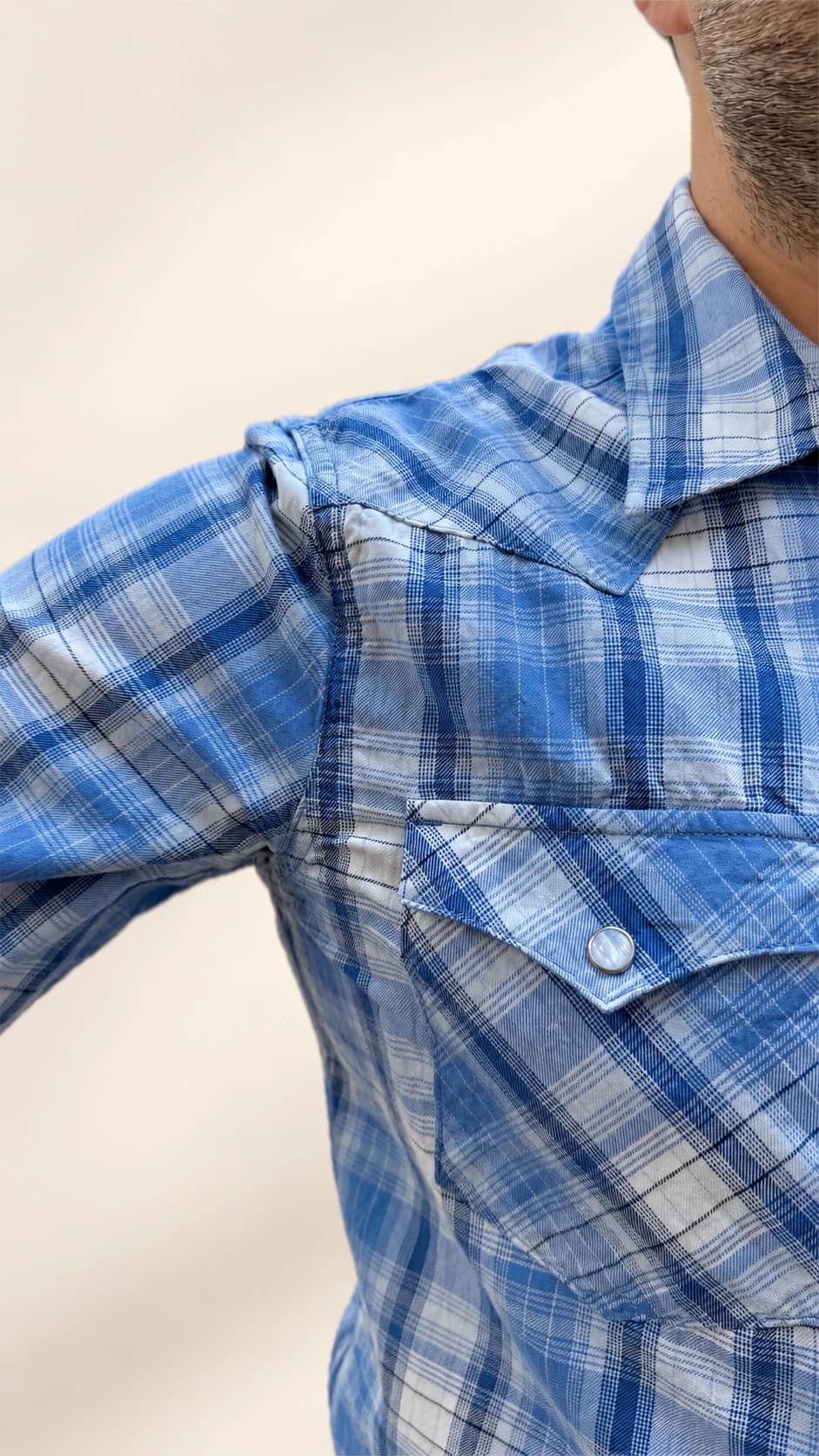
Blue plaid shirt
The more structured plaid surface makes the pad contour less visually obvious in this example. Seam construction, fit, placement, and movement still affect the result.
Use the photographs as prompts for what to inspect: the surface around the underarm, the line of the seam, the pad footprint, and any change when the arm moves. A result that looks subtle in one photographed shirt should not be transferred as a promise to another garment.
Compare the examples by looking beyond color. The light pink shirt has a relatively fine surface, the gingham introduces a repeating check, and the blue plaid appears more structured in this view. Those differences affect what the eye notices, but each shirt also places different tension around its armhole and seams. That is why a photograph can guide an inspection without predicting how a different shirt will behave.
The complete system matters
Why the Same Pad Looks Different in Different Clothes

Thickness, opacity, texture, and pattern
Fine or less opaque fabric may reveal changes beneath it more readily. Texture and pattern can make a contour less obvious in some views, but they can also make adhesive contact less predictable. Treat these features as reasons to test, not guarantees.
Stretch, fit, and underarm tension
A close fit can press or stretch the outer surface over the pad, while arm movement changes tension across the underarm. A relaxed garment may provide more visual room but still needs enough stable interior fabric to support the insert.
Seams, darts, lining, gussets, and armholes
Construction determines how much smooth interior panel space is available. A bulky seam, lining edge, dart, narrow armhole, or sharply bending sleeve can interrupt placement or put an edge where it becomes easier to see.
Placement, movement, and pad condition
The pad footprint should match the usable underarm area and where moisture reaches the clothing. Incorrect placement, repeated movement, folding, saturation, shifting, or edge lift can change both the surface appearance and the coverage. A flat insert can become more apparent after fabric gathers around it, so the check should include movement rather than a mirror view at rest alone.
For pad types, formats, and broad garment compatibility, use the complete Sweat Pad Guide. Detailed placement and correction steps remain in the clothing-only application guide.
Testing priority, not a guarantee
Garment and Fabric Decision Framework
Use the three levels to decide how much testing an outfit needs, not to label a fabric universally suitable or unsuitable. A structured surface can still reveal a lifted edge, and a relaxed garment can still fail when a seam interrupts the adhesive area.
Lower visibility concern, still test
Enough smooth underarm fabric, a reasonably opaque or structured surface, comfortable room, and a pad that remains flat.
Confirm with light and movement checks.
Outfit-dependent
Dress shirts, blouses, uniforms, lined garments, layered outfits, or clothing with moderate stretch and mixed construction.
Inspect seams, side views, openings, and movement.
Higher visibility concern
Very thin, less opaque, close-fitting, highly stretchy, delicate, or minimally constructed underarm areas.
Choose another setup when the outline remains distracting.
Six-step outfit check
How to Test Visibility Before Leaving Home
Test the exact outfit rather than predicting the result from a fabric label. A successful home check does not guarantee that the pad will remain unchanged through an entire day. Use the lighting and movements that resemble the intended setting: a bright office, outdoor arrival, seated travel, or repeated reaching may reveal different parts of the underarm area.
- 01
Apply a fresh pad to compatible, clean, completely dry clothing using the established application guidance.
- 02
Put on the complete outfit, including any undershirt, jacket, blazer, dress layer, or overshirt you plan to wear.
- 03
Check front and side views in normal room light, then repeat the check in brighter light.
- 04
Raise, lower, and reach with both arms as you normally would in the outfit.
- 05
Inspect the pad outline, edges, sleeve opening, fabric bunching, comfort, and any sound during movement.
- 06
Move normally for several minutes, recheck the result, and choose another setup if it is not acceptable.
If placement needs correction, follow the existing How-To rather than repeatedly peeling and reusing a worn pad. Replace the pad when saturated, loose, folded, shifted, or uncomfortable.
Practical outfit differences
Visibility by Garment Type
Dress shirts and button-ups
The pink, gingham, and plaid photographs show why button-ups should be judged individually. Inspect the woven surface, underarm seam, sleeve shape, and tension created when the shirt is buttoned and tucked as intended. For the broader routine, see how to prepare and protect shirts before wear.
Also check the shirt from the side with the arm relaxed. Raising an arm makes the underarm easier to inspect, but a normal standing position can show how the fabric settles over the pad during conversation, walking, or desk work.
T-shirts and fitted tops
Knit stretch and a close fit can pull the outer surface over the pad. Check the shirt at rest and after raising, reaching, and lowering the arm, paying attention to whether an outline or fold becomes more obvious.
Blouses, dresses, and formalwear
Draping, lining, delicate material, sleeve shape, and narrow armholes can reduce usable space. Check the outfit while standing, sitting, and raising an arm. With sleeveless or cap-sleeve designs, inspect the opening from several angles because an insert can remain hidden through the fabric yet become exposed at the edge. Do not use a setup that exposes the pad near an opening or conflicts with the garment’s care requirements.
Uniforms and workwear
Test the actual uniform through repeated work movements and respect garment or employer rules. Consider whether the pad remains discreet and whether a private inspection or replacement is practical. For higher or unpredictable moisture, use the specialist selection and replacement-planning guide.
Jackets, blazers, and layered outfits
An outer layer may obscure the underarm area, but it also changes pressure, warmth, and movement. Test every intended layer together; an acceptable shirt-only result can change once a jacket or overshirt is added.
Choose the outfit, not the promise
When the Pad Is Too Noticeable
Check another placement only when it remains compatible with the established application instructions. Use a fresh pad when the current one is folded, lifted, shifted, or saturated. Reusing an unstable pad can preserve the same visible edge or bunching rather than solve it.
If a stable insert remains too noticeable, choose another compatible garment. When the construction cannot support the pad or replacement access is impractical, another clothing- protection setup may fit the routine better. Compare removable pads and sweat-proof undershirts without assuming a universal winner. If the clothing-adhesive format still suits the garment, review the verified SWEARX product details.
A garment-specific decision
Bottom Line
Visibility is an outfit result, not a universal product promise.
Judge the exact garment in realistic light and movement. If a flat, correctly placed insert remains too visible or unstable, that garment and setup are not a suitable match. SWEARX helps absorb moisture that reaches compatible clothing; it does not stop perspiration or guarantee invisible wear.
Buyer questions