

Start with the mark
Moisture mark or set-in discoloration?
A dark patch that appears during the day is usually a fresh moisture mark. It changes the way the fabric reflects light and may fade as the garment dries. An older yellow, pale, or stiff underarm area is different: repeated moisture, body oils, underarm-product residue, washing, heat, and time may all contribute to discoloration or buildup in the fibers.
Identify which situation you have before acting. A fresh mark calls for airflow and gentle handling; an older mark needs care that matches the garment label, color, construction, and fabric. One cleaning method is not safe for every item.
If the garment is still clean and your goal is prevention, use the shirt-specific preparation, fit, and outfit-testing steps in our guide to preventing sweat stains on shirts. The guidance below remains focused on a mark that is already visible or has become set into clothing.
Cause and effect
Why sweat marks appear on clothing
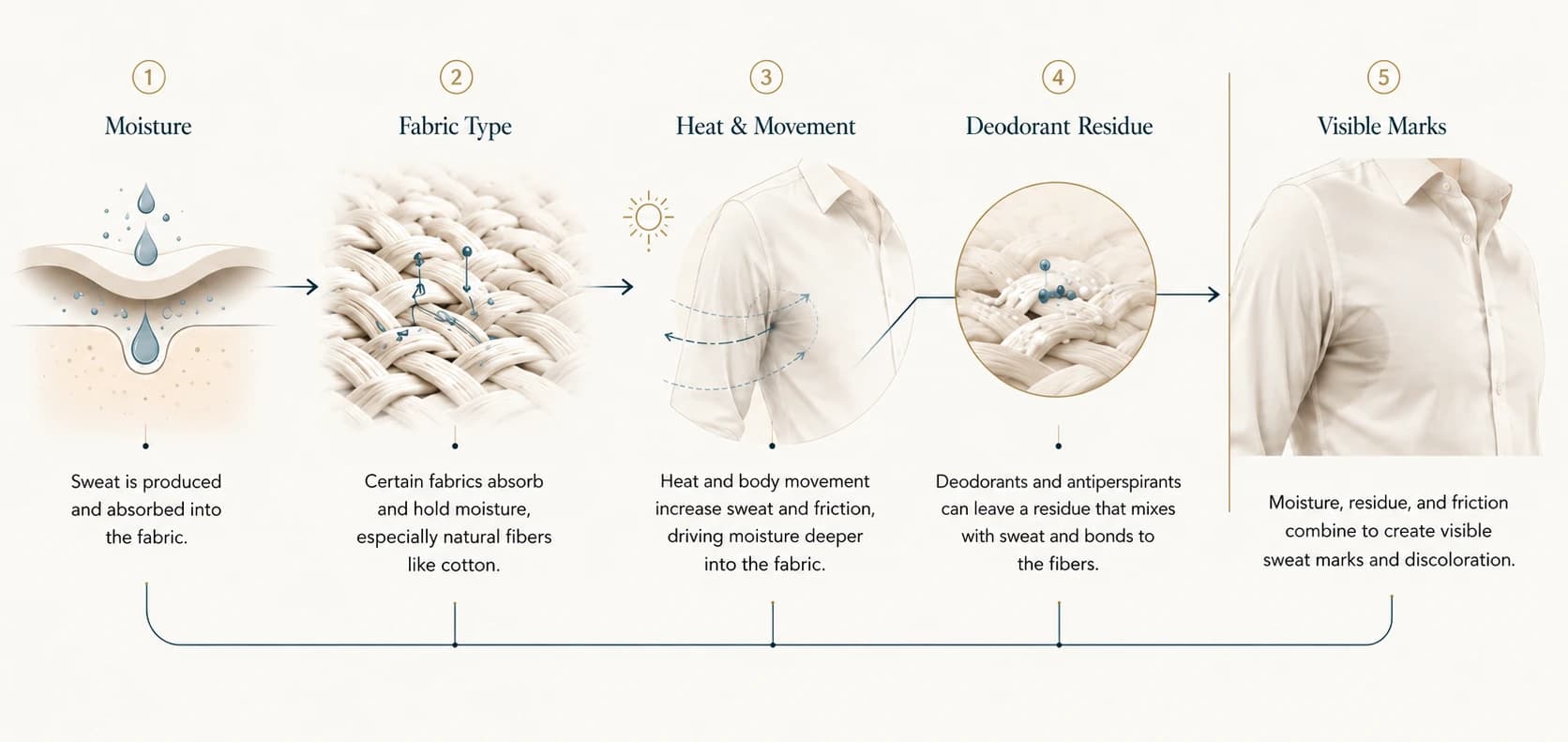
A visible mark forms when moisture reaches fabric. How clearly it shows depends on the garment color, fiber, weight, weave or knit, fit, and finish, as well as heat, movement, activity, and the amount of moisture reaching the material.
Residue is a separate part of the problem. Body oils and some deodorant or antiperspirant formulas can transfer to clothing. Repeated wear or drying unresolved marks with heat can make the underarm area look or feel different over time. This does not mean one ingredient causes every stain.
Immediate response
What to do when a fresh mark appears
Treat the fabric gently. Rubbing can spread moisture and may disturb the surface of delicate material. If possible, move somewhere cooler, loosen an outer layer, and let air circulate around the damp area.
Blot with a clean, dry, color-safe cloth when that can be done without damaging the garment. Do not scrub, flood the area, or apply an unfamiliar stain product while wearing the item. If you have a spare shirt, blouse, uniform top, or jacket, change layers and allow the damp garment to air instead of sealing it in a bag.
Blot
Press gently with a clean, dry cloth; avoid rubbing the fibers.
Air
Give the garment airflow and separate damp layers when practical.
Recheck
Inspect the mark and care label before laundering or applying heat.
Garment care
Care for existing underarm discoloration
Read the care label before choosing water temperature, pre-treatment, washing, bleaching, drying, or ironing. Test an unfamiliar fabric-compatible product in an inconspicuous area. Apply only the amount directed, avoid aggressive scrubbing, and rinse or wash as the product and garment labels instruct.
After washing, inspect the underarm area before machine drying or ironing. If residue remains, repeat only a permitted care step rather than setting the mark with heat. Take dry-clean-only garments, tailored pieces, and items with delicate trims or unstable dyes to a professional cleaner when their labels or construction require it.
Avoid added damage
Actions that can make a mark harder to manage
A quick response should still be gentle. More product, pressure, or heat is not automatically more effective, and an aggressive treatment can leave a second problem on top of the original mark.
Do not rub the damp area
Rubbing can spread moisture, disturb a delicate surface, and work residue farther into the fibers. Blot gently when the material allows it.
Do not rush to heat
Avoid ironing or machine drying while residue or discoloration remains. Recheck the area after a permitted wash or treatment.
Do not mix unfamiliar treatments
Follow both garment and product directions. Combining stain products, bleach, or household ingredients can damage color or fibers and may be unsafe.
Do not seal a damp garment away
When washing must wait, give the item airflow instead of leaving it compressed in a closed bag or warm laundry pile.
Fabric decisions
Adjust the approach to the garment
Cotton, linen, wool, synthetics, blends, and performance fabrics respond differently to moisture and care. Fabric weight and construction can matter as much as the fiber name. A pale blouse may show residue differently from a dark uniform; a lined dress or tailored jacket may need professional care.
- Lightweight or delicate fabric: avoid rubbing, harsh products, and assumptions based on fiber name alone.
- Uniforms and workwear: follow employer and garment care requirements; inspect repeated-contact areas promptly.
- Dark or patterned clothing: hidden wetness does not mean residue is absent; check the underarm area after wear.
- Dry-clean-only or structured garments: air the item and tell the cleaner where the mark or residue appears.
Clothing protection
Ways to reduce future visible marks
Prevention can combine a garment with practical underarm room, a fabric and color suited to the day, prompt after-wear care, and an optional washable or disposable clothing barrier. Test the complete outfit before a long shift, commute, presentation, or event because fit and movement affect the result.
Clothing-adhesive underarm pads are one option. They attach to clean, dry clothing and help absorb moisture before it reaches the outer fabric. They do not attach to skin, treat sweating, stop perspiration, or guarantee that a mark will not appear. Performance varies with garment, placement, heat, activity, movement, and moisture level.
For placement and replacement guidance, read how to use underarm sweat pads inside clothing. The canonical Sweat Pad Guide connects all published clothing-protection guides.
Clothing Protection Option
Where SWEARX fits in
SWEARX underarm sweat pads attach inside clothing to help absorb underarm moisture before it reaches the outer fabric.
Use on clean, dry fabric and position the pad where underarm moisture reaches the garment.
View Product Details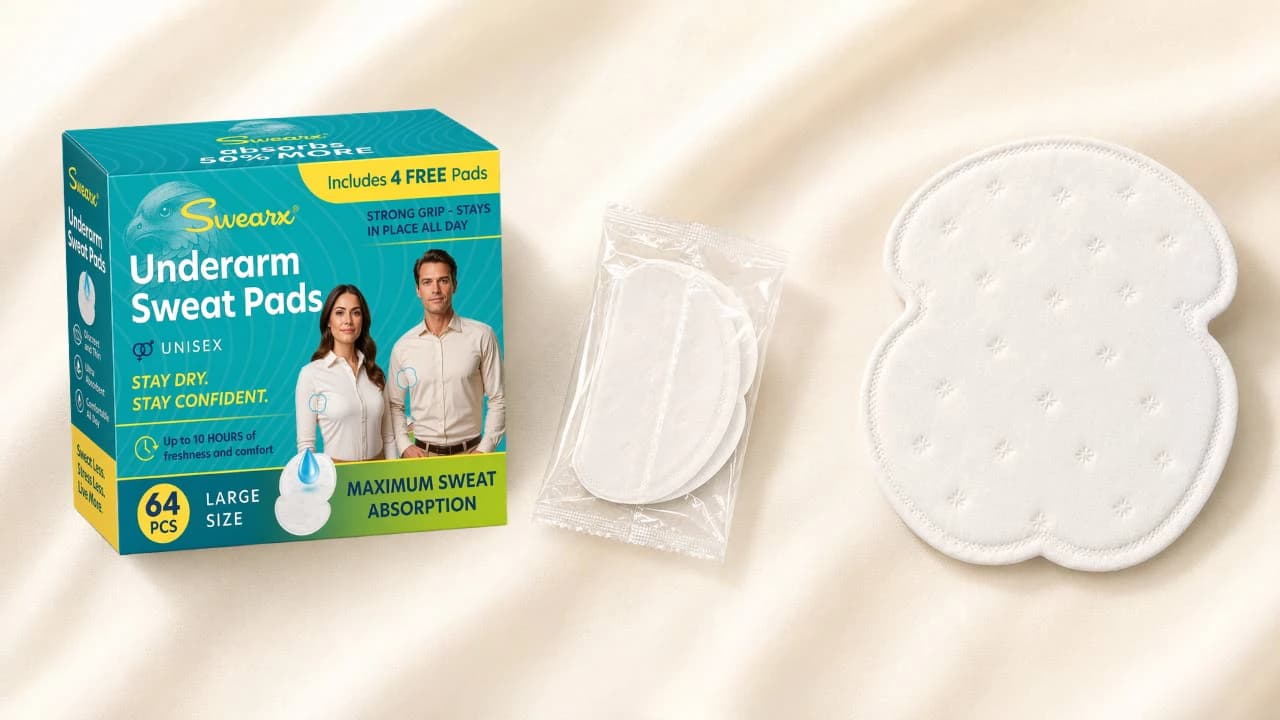
Buyer questions
Frequently asked questions
Move to a cooler place when practical, blot the fabric gently instead of rubbing it, and give the garment airflow. If you can change layers, let the damp garment air before laundering it according to the care label.