
Clothing-adhesive sweat pads are convenient because they put an absorbent layer inside a garment without permanently altering it. But the adhesive must also release from that garment. A compatible shirt may show no obvious problem; another fabric or removal attempt may leave residue, pull at its surface, or separate the pad. These outcomes are possible, not inevitable, and the photographs below show garment-pad problems generally—not damage attributed to SWEARX or to any identified manufacturer.
Identify the outcome
What Does ‘Damage’ Actually Mean?
Different marks call for different decisions. A sticky trace after the pad comes away is adhesive residue. Pieces of backing or absorbent material left behind are pad-material residue; the pad may have separated before its adhesive released. Neither sight alone proves that the garment is permanently damaged.
Fiber pull is different: loose or delicate fibers lift with the adhesive, altering the cloth’s surface. Fabric distortion can look like stretched, bunched, compressed, or uneven material after removal. A change in color may come from moisture, body products, dye behavior, cleaning, or residue; do not assume every discoloration is adhesive damage. Stop and identify what remains before trying to treat it.
A possible, not universal, result
Can Underarm Sweat Pads Leave Adhesive Residue?
They can. An adhesive designed to grip garment fibers may release differently from a smooth, stable weave than from lint, a raised texture, stretch, or a specialty finish. Moisture, heat, movement, pressure, and time attached may change the experience of peeling it away. The result is a garment-and-pad interaction, not a property that can be predicted from the fiber name alone.
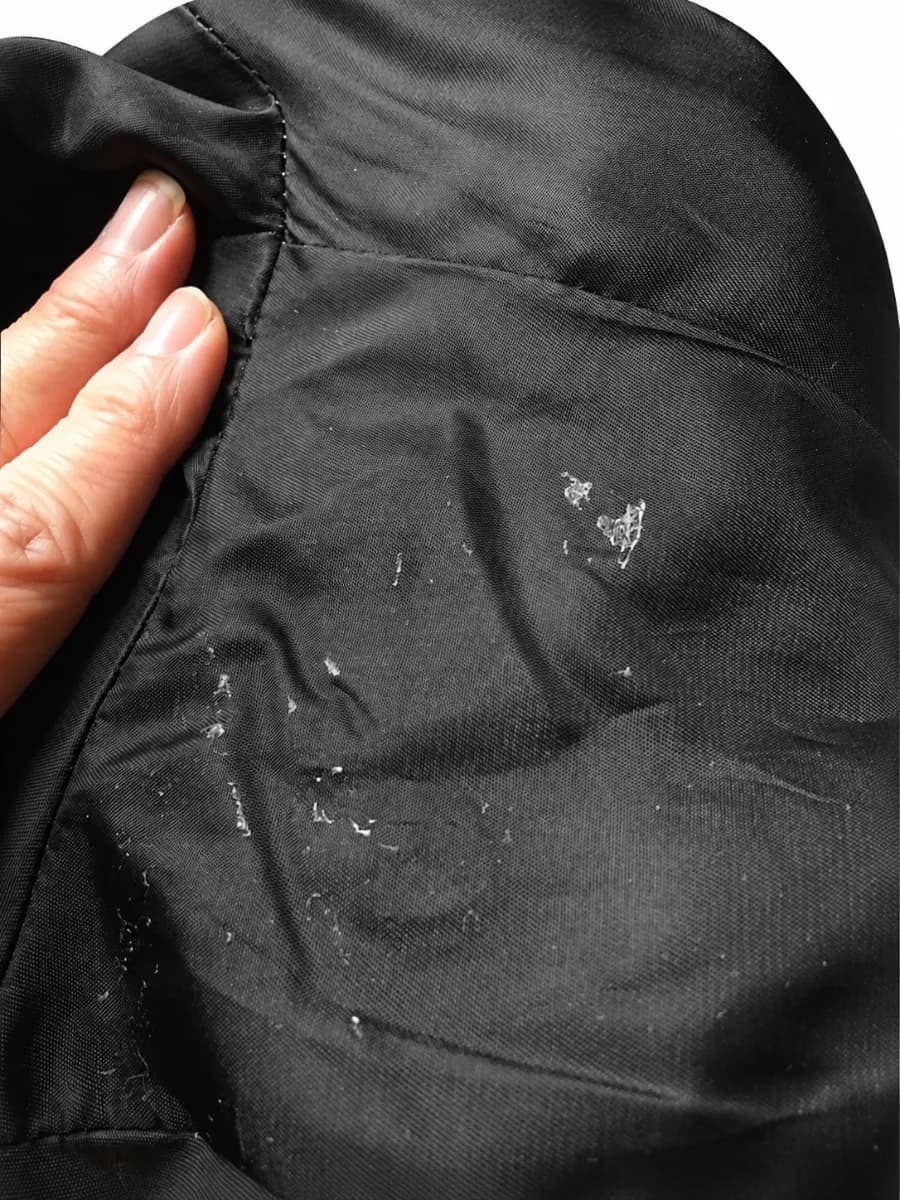
A garment-shield manufacturer also cautions that some adhesive pads may leave sticky residue. That is a manufacturer warning, not a measured rate for all pads or proof about the pad pictured here. Inspect a discreet test area on the specific garment when feasible, especially before using adhesive inside valuable clothing.
Pad failure versus fabric damage
What Can Go Wrong During Removal?
An uneven pull can release one part of a pad while another remains firmly attached. The absorbent layer or backing may split, leaving material on the garment. Pulling straight outward can also put more tension on the cloth than peeling the adhesive back gradually. If the fabric moves with the pad, stop; more force is not a better removal method.
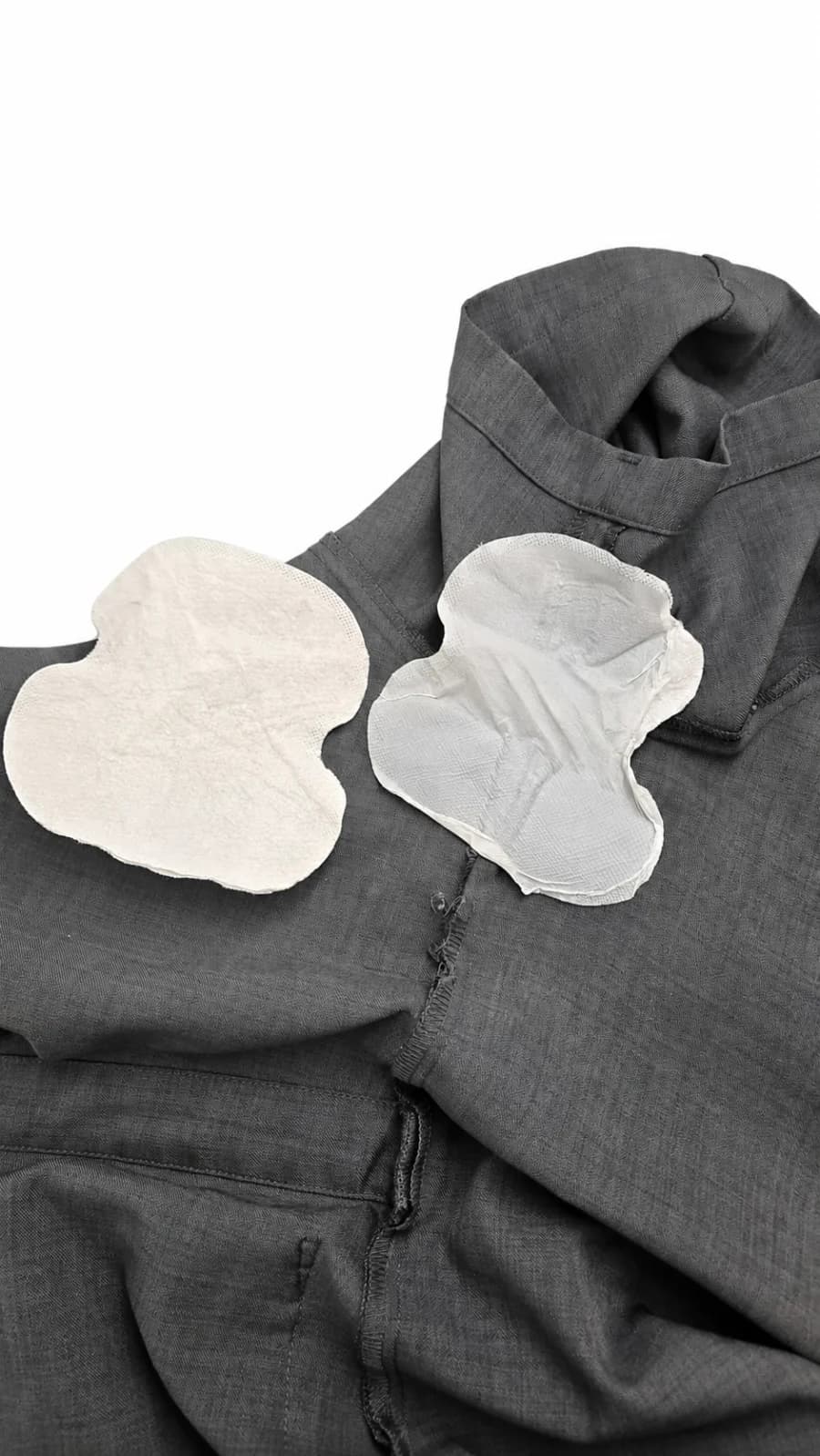
A separated pad is not automatically a ruined shirt. Assess whether you are seeing pad material, a sticky film, lifted garment fibers, or a changed fabric surface. Those require different levels of caution. Do not scrape at an uncertain mark simply because it looks like residue.
Judge construction, not just fiber
Which Fabrics Deserve Extra Caution?
This is a testing-priority framework, not a laboratory ranking. Very fine or loosely woven material, fuzzy or brushed surfaces, some knits, high-stretch panels, and coated or treated fabrics may give adhesive an uneven or fragile contact surface. Embellishments, linings, and expensive or irreplaceable garments raise the consequence of a poor test. Check the garment maker’s instructions and skip the pad if you cannot accept the risk.
Higher caution
Delicate, loose, fuzzy, heavily textured, highly stretchy, finished, coated, or sentimental clothing: test conservatively or choose another setup.
Easier to assess
A smooth, stable woven interior with a broad, flat underarm panel may be easier to place and inspect, but it still needs a garment-specific test.
“Cotton,” “polyester,” “silk,” or “wool” by itself is not a compatibility verdict. The weave, surface finish, construction, care requirements, and actual underarm panel matter alongside fiber composition.
Before committing to an outfit, look at the inside of the underarm rather than judging its outside appearance alone. A lining may be smoother than the outer cloth, or it may move independently and bunch around the pad. A seam can divide an otherwise usable area. If a garment is valuable, a brief test is useful only when you can remove the pad without risking the finish; otherwise, choosing a non-adhesive arrangement is the more conservative choice.
A controlled removal sequence
How to Remove an Underarm Sweat Pad More Carefully
Removing the garment first lets you see the adhesive area and hold the cloth steady. Work slowly enough to notice resistance before it becomes a pulled fiber or a split pad.
- 01
Take the garment off first. Trying to tear a pad out while wearing the garment gives you less control over the fabric.
- 02
Lay the underarm area where you can see it and support the fabric beside the pad with one hand.
- 03
Lift one edge and peel slowly back over the pad, keeping the pull close to the garment rather than straight outward.
- 04
Pause if the cloth stretches, loose fibers lift, or the pad begins to split. Do not yank to finish the removal.
- 05
Once removed, inspect the inside surface and dispose of the used pad. Do not repeatedly reattach it.
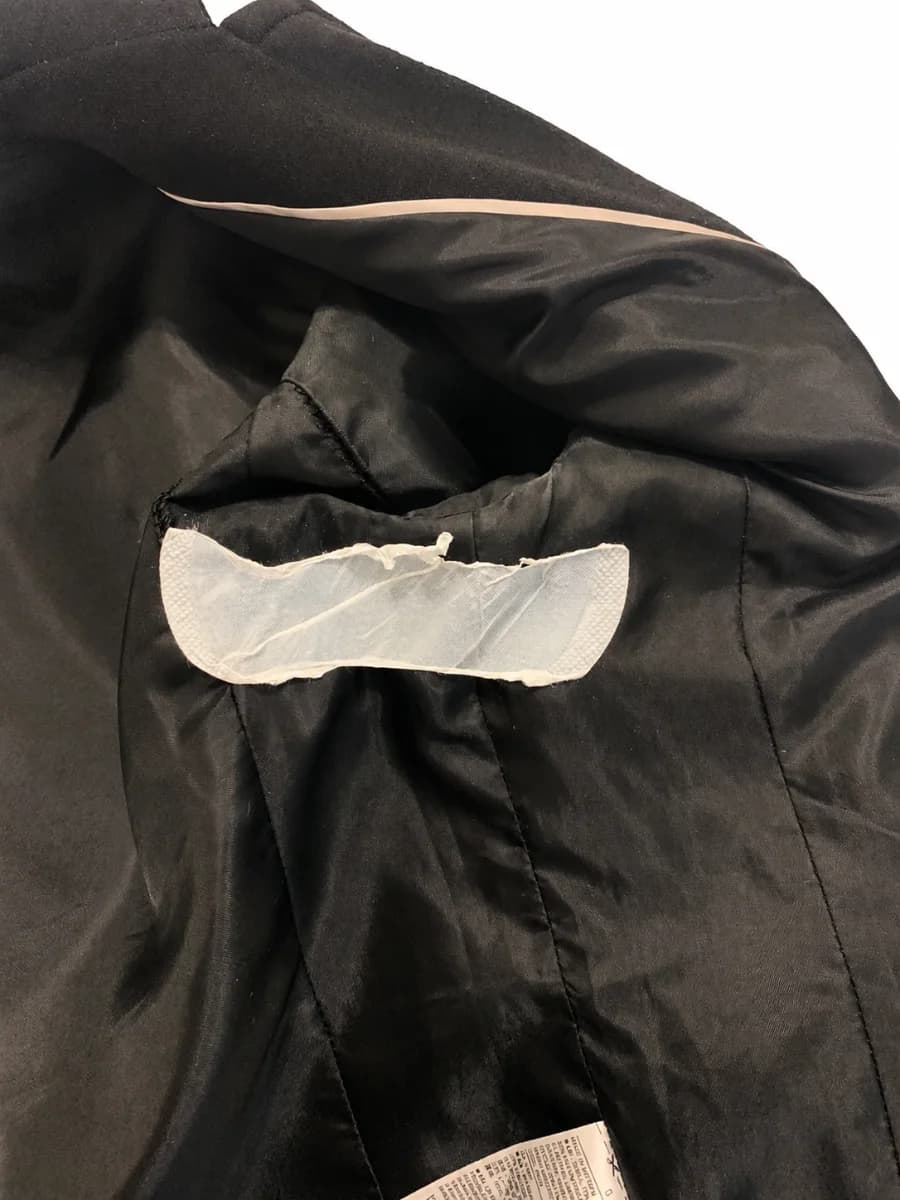
If material is still attached after a careful attempt, avoid escalating to sharp tools or a solvent without checking the garment and pad guidance. Delicate fabric may need professional help before further handling.
Care before chemistry
What to Do If Adhesive Residue Remains
First read the care label and identify the fabric and finish if you can. Avoid vigorous rubbing, scraping, or heat that the garment has not been cleared to tolerate. For a washable item, choose only a fabric-appropriate cleaning approach and pretest any treatment on an inconspicuous area when appropriate. The American Cleaning Institute recommends care-label checks and inconspicuous pretesting when treating clothing marks.
For dry-clean-only, delicate, expensive, coated, or unknown fabrics—or substantial residue—ask a professional cleaner before experimenting. There is no universal safe solvent recipe for every garment. Alcohol, acetone, bleach, and commercial adhesive removers can interact differently with dye, finish, lining, and trim. A stain or discoloration may have another cause and may need a different assessment.
Note what you can see before cleaning: is the material sticky, fibrous, powdery, or part of the garment surface? Keep the garment out of a dryer until you know which care-safe approach is appropriate. If you take it to a cleaner, explain that an adhesive-backed underarm insert was removed and show where material remains. That context is more useful than applying several untested products in sequence, which can make the original issue harder to identify.
A short garment check
How to Reduce the Risk Before Wearing
- Read the garment care label and consider whether adhesive contact is appropriate for this particular item.
- Start with clean, completely dry fabric inside the underarm area.
- Choose a smooth, usable panel rather than forcing the adhesive across a thick seam.
- Test the exact garment before an important event; check normal movement, comfort, and the finished outfit.
- Be especially cautious with delicate, loose, fuzzy, highly stretchy, treated, or specialty surfaces.
- Remove the pad after use instead of leaving it attached indefinitely, then peel it away gradually.
For full placement and removal guidance, see How to use underarm sweat pads correctly. A fresh pad and a clean, dry garment are a better test than repeatedly moving a used adhesive surface.
A reasonable alternative is allowed
When Should You Skip an Adhesive Pad for a Particular Garment?
Skip it when the garment is delicate or irreplaceable, its inside surface is unstable or fuzzy, or its maker discourages adhesive contact. A trial that lifts fibers, leaves unacceptable residue, pulls the cloth out of shape, or cannot lie flat is enough reason to change the plan. Do not force a pad into a narrow armhole or across a bulky seam just to make it fit.
Another garment, a layering strategy, or a different clothing-protection setup may suit the day better. If you are deciding between removable pads and a reusable base layer, the pads-versus-undershirts comparison explains those tradeoffs without assuming one winner.
Clothing-only use
SWEARX-Specific Practical Guidance
SWEARX is designed to adhere inside clothing only, never directly to skin. Start with clean, dry inside-underarm fabric; test the complete garment before wearing it out; and remove the pad gradually after use. Compatibility can vary. The product details describe the SWEARX format, while the Sweat Pad Guide covers other pad types and general selection.
Fabric risk is only one part of outfit suitability. The garment visibility guide helps assess whether the pad outline is acceptable, and the effectiveness guide explains what clothing protection can and cannot be expected to do.
A garment-specific decision
Bottom Line
The pad and the particular garment have to work together.
Adhesive pads can leave residue or disturb fabric under some conditions; they do not inevitably damage clothes. Test the exact garment, choose suitable placement, peel slowly, and treat delicate clothing conservatively. If a test leaves an unacceptable mark or requires forceful removal, choose another setup rather than relying on a promise of universal compatibility.
Buyer questions